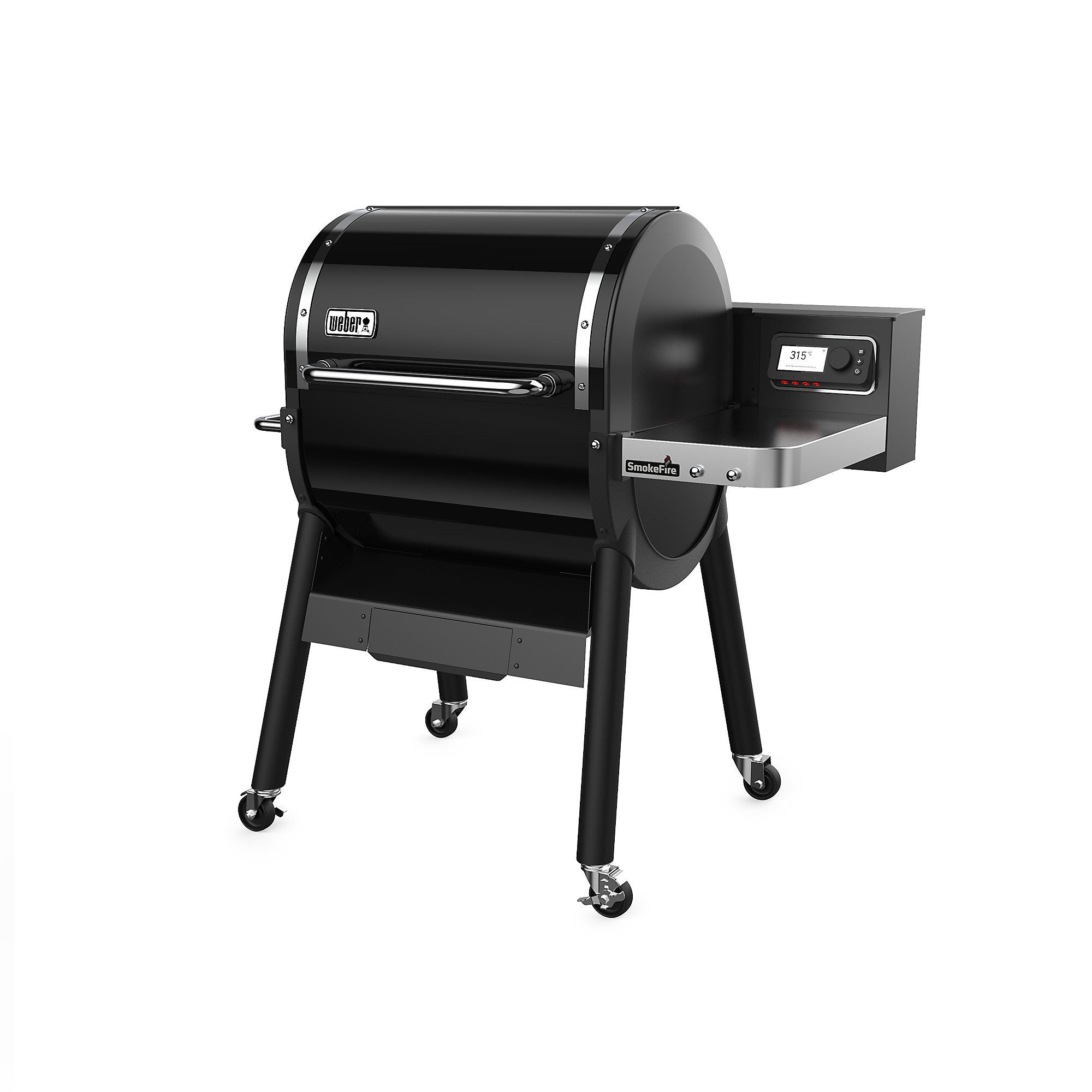
Weber SmokeFire Black Wood pellet grill
Sold & shipped by B&Q
Item In Stock for Home Delivery
Was £1,600 £1,280 £1,040
SAVE £560 on Weber BBQ SMOKER
Hard to go wrong with a Weber smoker, I'd say the Weber is one of the best BBQ smoker for beginners as it's a tried and tested piece of kit with plenty of info and reviews online that makes it easy for a beginner to learn the basics of smoking meat so beginners can be sure that the smoker is doing its part.
540 quid savings on this deal gets you going with cash to buy some BBQ accessories for a great beginners kit
Easy to follow any of the online guides for those looking to learn, using their current grill or smoker!
Why Smoke Your Meats?
Smoking adds flavor, improves the appearance of meat through the Maillard reaction, and when combined with curing it preserves the meat.
What is the Maillard reaction process?
In short, the Maillard reaction is what gives flavour to anything in the kitchen if you were to ask me so learn about it and take it to your BBQ area.
For the science of the Maillard reaction:
The Maillard reaction is a cascade of reactions initiated by the condensation reaction of an amino group with the carbonyl group of reducing sugar. In dairy systems, these are primarily the amino groups of lysine and arginine as well as N-terminal amino groups of proteins and peptides while the reducing sugar is lactose (or glucose and galactose in lactose hydrolysed products). The Maillard reaction is sometimes divided into the initial, intermediate and final Maillard reactions to help to systemise this reaction. The early Maillard reaction is the condensation of the amino group with a carbonyl group to a Schiff's base which undergoes rearrangement to form the Amadori or Heyns product. The intermediate Maillard reaction consists of the breakdown of the Amadori product which can release the amino group and sugar fragmentation products including highly reactive α-dicarbonyl compounds. The final stage of the Maillard reaction covers a multitude of condensation, dehydration, fragmentation and polymerisation reactions giving rise to advanced glycation end (AGE) products and finally melanoidins, large polymerised compounds responsible for browning and colour changes.
